
Koh Samui – Thailand's tropical island paradise
Palm-fringed white beaches, warm turquoise water, jungle-covered hills and some of the most beautiful sunsets in Asia. Koh Samui is Thailand's second-largest island and one of its most loved – a place where people come for a holiday and end up staying for life.
Unlike many tropical destinations, Samui combines natural beauty with everything you need to live well: an international airport, private hospitals, international schools, world-class resorts and restaurants, and a relaxed, welcoming community from all over the world. That mix is exactly why it has become one of Southeast Asia's most attractive places to own a home – and to invest.
Koh Samui at a glance
- Province
- Surat Thani, Gulf of Thailand
- Size
- approx. 229 km² – about 50 km around the ring road
- Climate
- Tropical, around 27–32 °C all year
- Best season
- December to August (rainy season mainly Oct–Nov)
- Getting here
- ~1 hour flight from Bangkok, direct flights from Singapore & Hong Kong, ferries from Surat Thani
- Main areas
- Bophut, Chaweng, Lamai, Maenam, Choeng Mon, Nathon
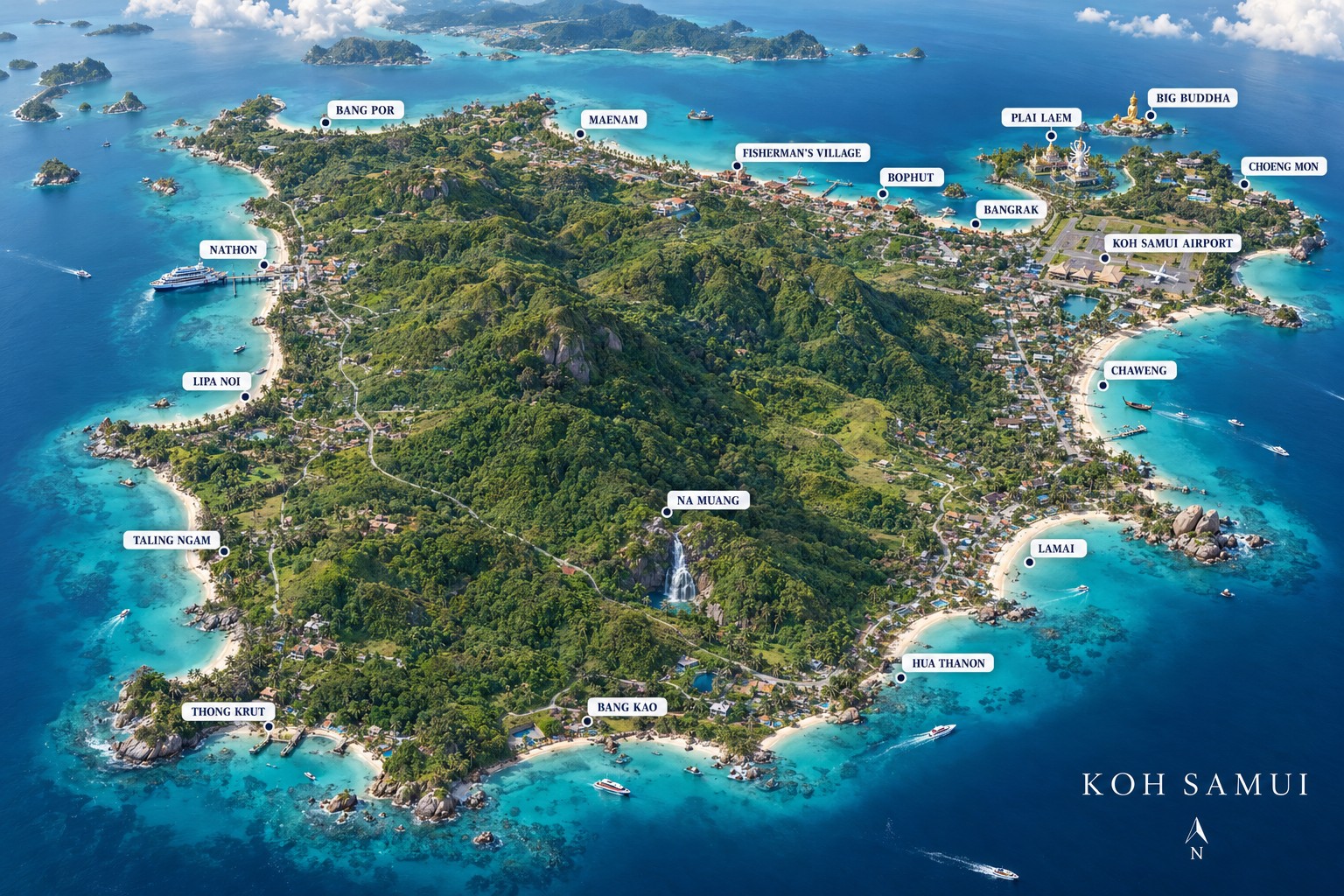
Where everything is on Koh Samui
From the lively east coast beaches of Chaweng and Lamai to the calm north coast of Bophut and Maenam and the quiet sunset side around Lipa Noi and Taling Ngam – every part of the island has its own character.

Illustrative map – not to scale. Use our map search to see every listing on the island.
More than a holiday island
Samui's property market is driven by real, year-round demand – and by a supply of land and hotel rooms that simply cannot grow very fast on an island.
Strong rental returns
Well-located, well-managed villas and condos typically earn gross rental yields from around 7% a year, with the best holiday villas achieving more.
Growing visitor numbers
Air arrivals passed pre-pandemic levels in 2024 and kept growing in 2025, helped by new flights, cruise visits and global exposure from The White Lotus.
Limited supply
Hotel room supply has grown only about 1% a year, and strict building rules protect the hills and coastline – scarcity that supports long-term values.
International demand
More than half of visitors come from Europe, with growing demand from Asia, Australia and the Middle East – a broad, stable pool of renters and buyers.
Lifestyle you can use
Unlike a stock portfolio, you can enjoy your investment: spend the best months of the year in your villa and rent it out the rest of the time.
Clear ownership options
Foreigners can own condos freehold and secure villas and land through long-term registered leases – we explain every option before you commit.
An ever-growing market
Key figures from the latest independent market research on the island.
Sources: C9 Hotelworks – Samui Tourism Market Update (June 2025) and Samui Property Market Update (2025). Rental yield based on MyThai.House experience; returns vary by property, location and management.
What can a Samui property earn?
Holiday rentals on Samui are priced per night and peak from December to April and again in July–August. A well-presented property with good management can realistically achieve a gross yield starting at around 7% a year.
The biggest drivers are location (sea view, walking distance to the beach or Fisherman's Village), the quality of the furnishing and photos, and professional rental management. We can introduce you to trusted management companies and show you the real booking history of properties for sale.
Example: 3-bedroom pool villa
| Average price, 3-bed villa (250–350 m²) | ฿14.9M |
| Gross rental yield | 7% – 9% |
| Gross rental income per year | ฿1.04M – 1.34M |
| Example: 1-bed condo at ฿3.5M, 7% gross | ฿245,000 / yr |
| Plus potential capital growth | long term |
Where to buy on Koh Samui
A quick guide to the island's main areas. For a deeper comparison read our guide to the best areas to buy property in Koh Samui.
Bophut & Fisherman's Village
Charming beachfront village, restaurants and boutique hotels, close to the airport. The island's most popular area for buyers and holiday rentals.
View properties → East coastChaweng
Samui's longest and busiest beach, with shopping, nightlife and hospitals nearby. Strong short-term rental demand for condos.
View properties → North-eastChoeng Mon & Plai Laem
Quiet bays, luxury resorts and sea-view villas near the Big Buddha and Wat Plai Laem – prime territory for high-end villas.
View properties → East coastLamai
A relaxed beach town with a local feel, great value and lots of new developments, near the famous Hin Ta & Hin Yai rocks.
View properties → North coastMaenam & Bang Por
Long, calm beaches and a peaceful village atmosphere. Popular with families and long-stay residents, with excellent land opportunities.
View properties → West & southTaling Ngam, Nathon & the south
The sunset side of the island: unspoiled coastline, views to Ang Thong Marine Park and larger plots of land at lower prices.
View properties →Everything you need, on island time
Can foreigners own property on Koh Samui?
Yes – there are safe, legal and well-established ways to own property here. These are the most common:
Foreigners can own condo units outright, in their own name, within the 49% foreign quota of each building.
A registered 30-year lease at the Land Office, often with renewal options – the most common way foreigners buy villas.
You can own the house itself while leasing the land underneath – we always recommend an independent lawyer's due diligence.
Can foreigners buy property? · Freehold vs leasehold explained · FAQ