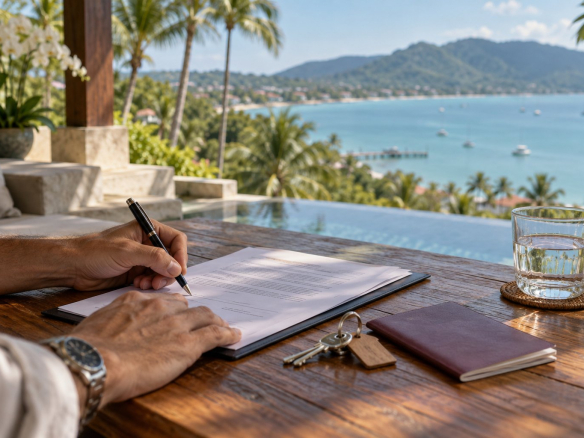

What I Look for When Viewing a Villa in Koh Samui: A Real Estate Agent’s Guide for Buyers
Buying a Villa in Koh Samui, Thailand – What You Should Check Before Making an Offer
Buying a villa in Koh Samui is exciting. With beautiful beaches, tropical surroundings, and a wide selection of private pool villas, it’s easy to fall in love with a property during your first viewing.
But after working in Koh Samui real estate and visiting different villas and developments, I’ve learned that a beautiful property doesn’t always mean it’s the right investment.
When I visit a villa, I don’t just look at the swimming pool, the furniture, or the sea view. I also pay attention to practical details such as road access, construction quality, property maintenance, and the surrounding neighborhood.
There are also important legal questions that buyers should understand before purchasing property in Thailand.
In this article, I’d like to share what I personally look for during villa viewings, along with some useful information about property ownership, Thai property law, and the questions I encourage buyers to ask before making a decision.
1. Location Is More Than Just a Beautiful View
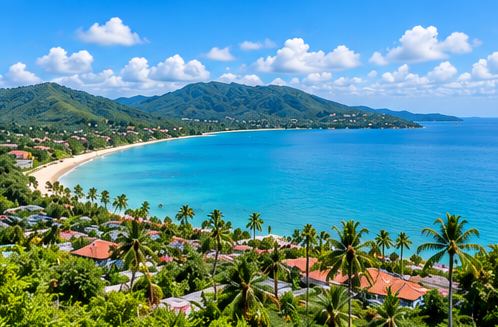
One of the first things I consider when visiting a property is its location.
Koh Samui has many attractive residential areas, including Bophut, Bangrak, Plai Laem, Chaweng Noi, Lamai, and Maenam. Each offers a different lifestyle.
Some buyers prefer a peaceful villa surrounded by nature, while others want to be close to restaurants, beaches, international schools, and shopping areas.
Personally, I always pay attention to how easy it is to reach the property.
A villa might have an incredible sea view, but if the road is extremely steep or difficult to access, it could become inconvenient for everyday living.
What I normally check:
- Is the access road steep, narrow, or difficult to drive?
- Is the road in good condition during rainy weather?
- How far is the nearest supermarket, hospital, or beach?
- Is the neighborhood quiet or surrounded by construction?
- Is the property suitable for full-time living or mainly holiday rentals?
- Is there a legal right to use the access road?
One thing I always recommend is visiting the property during the daytime and, if possible, returning during different weather conditions.
A location that looks perfect on a sunny afternoon might feel very different during heavy rain.
2. Construction Quality and the Condition of the Villa

When viewing a villa, it’s natural to focus on the interior design.
However, I believe construction quality is much more important than beautiful decoration.
Koh Samui has a tropical climate, with high humidity, heavy seasonal rainfall, and strong sunlight. These conditions can affect buildings over time.
During viewings, I pay attention to details that may indicate maintenance problems.
For example, I look for water stains on ceilings, cracks in walls, signs of dampness, and the general condition of doors and windows.
I also like to ask how old the villa is and whether major repairs or renovations have been completed.
Important things to inspect include:
- Roof condition and possible water leakage
- Cracks in walls, floors, or ceilings
- Waterproofing around bathrooms and swimming pools
- Air-conditioning systems and maintenance history
- Electrical installations and water pressure
- Drainage systems and signs of flooding
- Swimming pool equipment and filtration
- Retaining walls and hillside drainage, where applicable
For an older property, I recommend arranging an independent building inspection before completing the purchase.
A professional inspection can reveal problems that may not be visible during a normal viewing.
3. Understanding Property Ownership in Thailand
This is one of the most important topics for foreign buyers.
Before considering a villa purchase, buyers should understand the difference between freehold and leasehold ownership.
Freehold Ownership
Freehold generally means ownership without a fixed expiration date.
However, foreign individuals are generally not permitted to own land directly in Thailand, except under limited legal exceptions.
A Thai national or a legally qualified Thai company may own land, but company ownership must comply with Thai law.
Foreigners may be able to own a building separately from the land, provided the ownership and underlying land rights are properly established and documented.
Leasehold Ownership
Leasehold is a common option for international buyers purchasing villas in Koh Samui.
Under the general provisions of Thai law, a residential land lease can be registered for a maximum term of 30 years.
A lease lasting more than three years must be registered at the Land Office to be enforceable beyond three years.
Some developments advertise arrangements described as 30+30+30 years.
However, buyers should not assume that additional 30-year periods are automatically guaranteed. Renewals involve legal requirements and should be independently reviewed.
When considering a leasehold villa, I encourage buyers to ask:
- How many years remain on the lease?
- Is the lease registered at the Land Office?
- Can the lease be transferred to another buyer?
- Is subleasing permitted?
- What happens if the leaseholder passes away?
- Who owns the building?
- What happens to the villa when the lease expires?
A qualified Thai property lawyer should review the ownership structure before the buyer signs a binding agreement.
4. Check the Land Title Deed – Why Chanote Matters
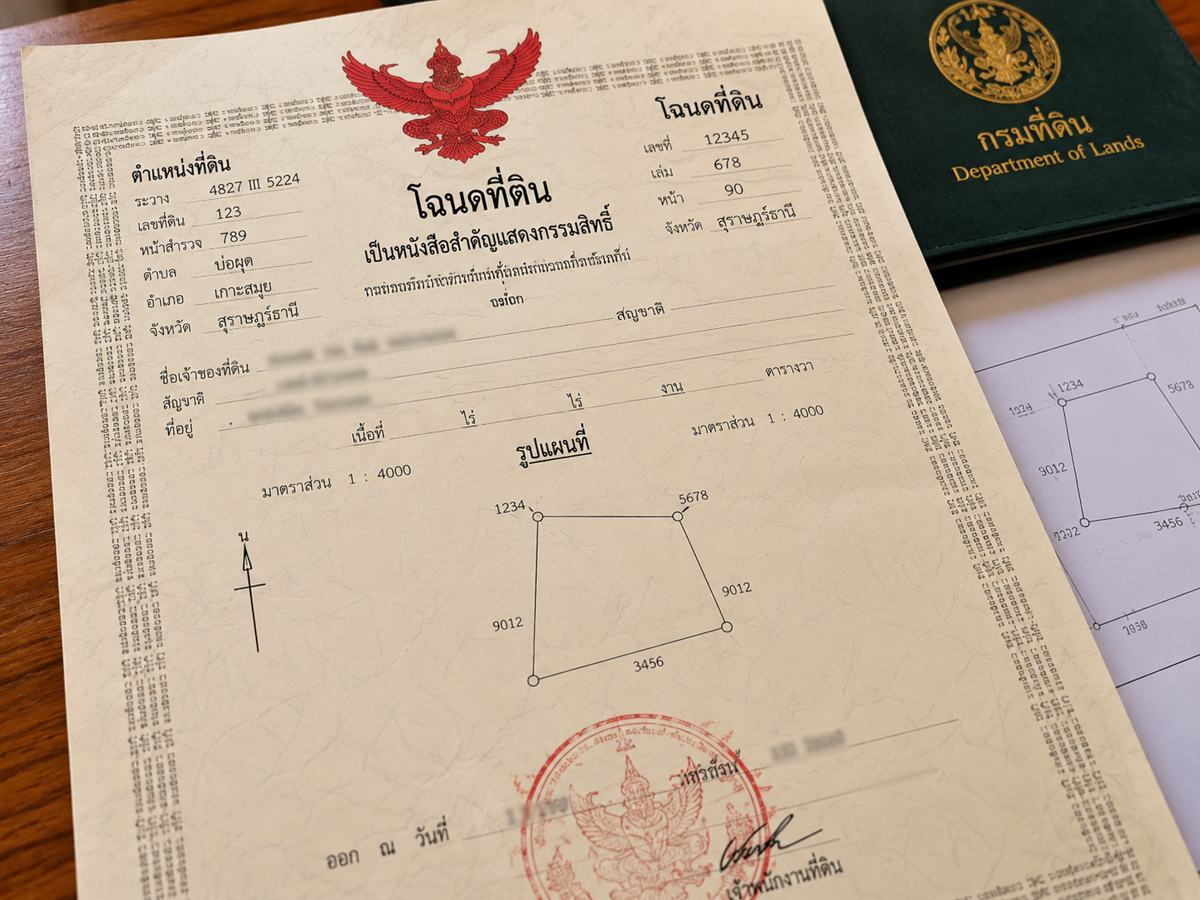
Another important part of purchasing a villa in Thailand is checking the land title deed.
A Chanote (Nor Sor 4 Jor) is a full land title deed with officially surveyed boundaries.
When a property is advertised for sale, buyers should not rely only on the information in the listing.
The land title and registration history should be independently verified.
I recommend asking a lawyer to check:
- Whether the seller is the registered legal owner
- Whether the land has an existing mortgage
- Whether there are registered leases or other encumbrances
- Whether the boundaries match the property being sold
- Whether there are restrictions affecting the land
- Whether the land has legally enforceable road access
For villas built on hillsides or near protected areas, additional checks may be necessary.
The title deed is an important starting point, but it does not automatically confirm that every building on the land was constructed legally.
5. Building Permits and Completion Documents

This is something I believe every serious buyer should pay attention to, especially when purchasing a resale villa.
A beautiful completed villa should still have its construction documentation checked.
One of the important documents is the building permit, which should correspond to the actual construction.
Depending on the type of building and applicable regulations, additional completion or use certificates may be required.
For certain properties, buyers may hear about the Or.6 (อ.6) certificate, which relates to the permitted use of buildings subject to specific building-control requirements.
Not every villa is required to have the same documents.
I recommend that buyers ask their lawyer or a qualified local professional to verify:
- The original building permit
- Approved architectural plans
- Whether the constructed villa matches the approved plans
- Whether extensions or renovations received necessary approvals
- Any applicable completion or building-use documentation
- Whether the swimming pool and additional structures are covered by the relevant approvals
These checks are especially important for properties that have been extended or substantially renovated.
A missing document does not automatically mean a property is illegal, but the situation should be investigated before purchasing.
6. Legal Road Access – Something Buyers Often Overlook

One of the most overlooked issues when purchasing property in Koh Samui is road access.
Many villas are located in private developments or hillside areas where the access road crosses land owned by another person.
Just because a road physically exists does not necessarily mean the villa owner has a permanent legal right to use it.
This is why I recommend checking whether the property has direct access to a public road or benefits from a properly established legal right of way.
In Thailand, a registered servitude, sometimes referred to as an easement, may provide legal access across another person’s land.
Buyers should also clarify who is responsible for maintaining private roads.
This is particularly important for properties with steep access roads that may require regular maintenance.
7. Understanding Maintenance Fees and Hidden Costs

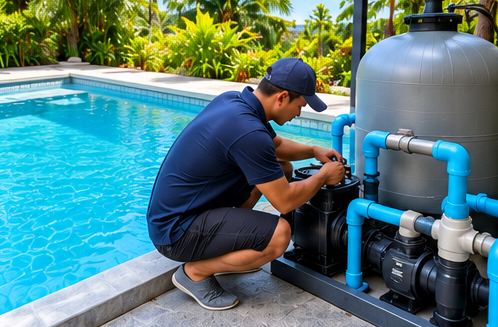
The advertised purchase price is not the only expense buyers should consider.
Owning a villa in Koh Samui comes with ongoing costs, and these can vary significantly depending on the property and development.
Some villas are located within managed communities that provide security, gardening, swimming pool maintenance, and common-area services.
Others are completely independent, meaning the owner must arrange everything separately.
Before purchasing, I recommend asking for a clear breakdown of the following expenses:
- Monthly or annual common-area fees
- Swimming pool and garden maintenance
- Electricity and water rates
- Waste collection and security
- Building insurance
- Private road maintenance
- Repairs and replacement of equipment
- Land lease payments, if applicable
- Property-related taxes and government charges
For leasehold properties, buyers should also check whether there are annual lease payments or other recurring obligations.
Understanding these expenses helps buyers calculate the real cost of owning the villa.
8. Taxes and Transfer Fees When Buying Property
Another subject buyers should discuss early is the cost of transferring or registering their property rights.
Depending on the transaction, Thai property-related charges may include transfer registration fees, specific business tax, stamp duty, withholding tax, and lease registration fees.
For example, the standard land ownership transfer registration fee is generally 2% of the official appraised value, although applicable reductions or exemptions may change the amount.
For a registered lease, the usual registration fee is 1% of the total rent for the lease term, plus stamp duty of 0.1%, subject to the applicable rules.
Not all taxes apply to every transaction, and the party legally responsible for a tax may differ from the party contractually agreeing to pay it.
My advice is to request a written breakdown of the estimated closing costs before signing a sale and purchase agreement.
The agreement should clearly state which expenses are paid by the buyer, which are paid by the seller, and which are shared.
9. Buying an Off-Plan Villa – What Should You Check?
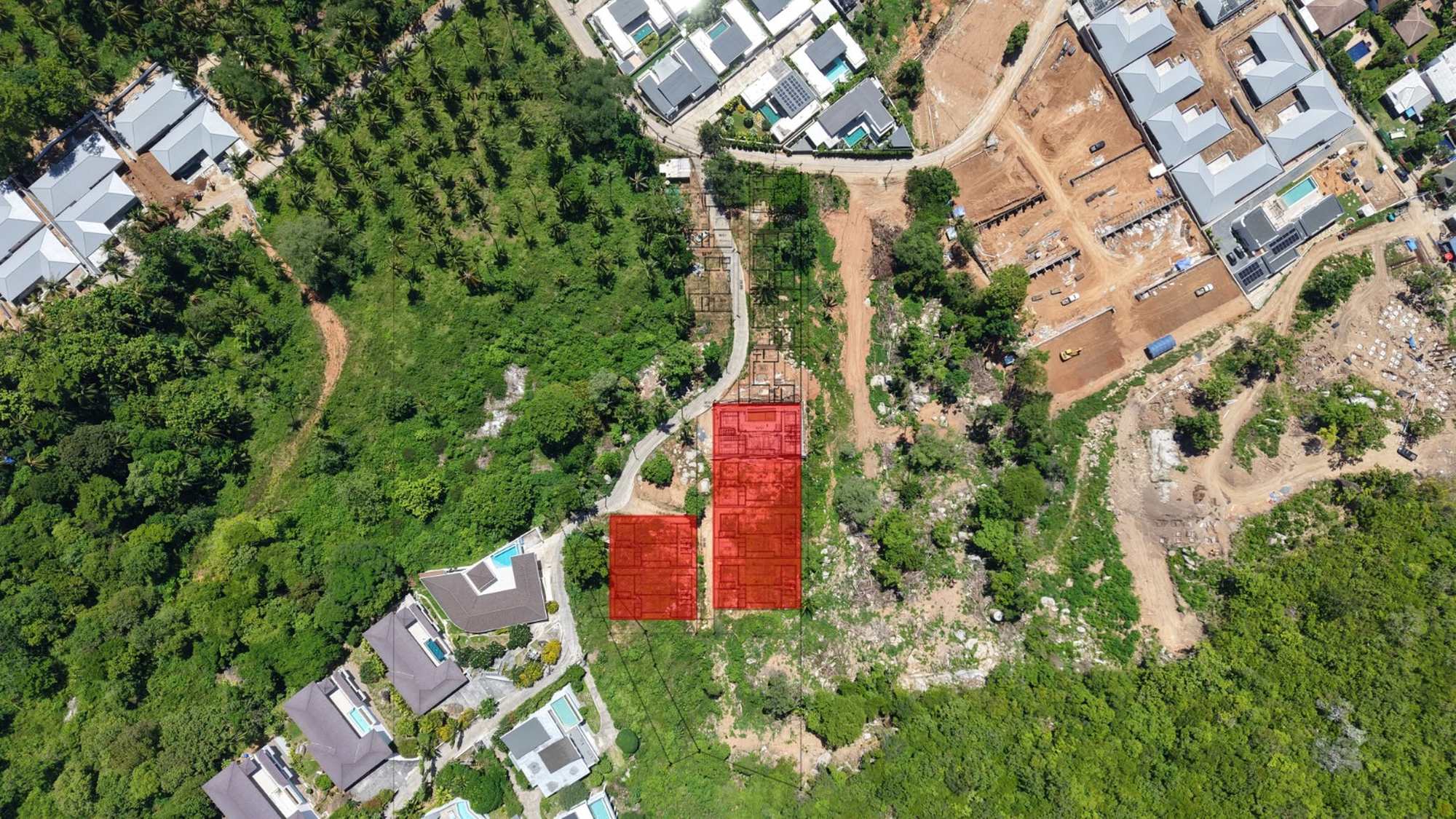
Koh Samui has many attractive off-plan villa developments.
Buying off-plan can offer advantages such as modern designs, payment installments, and the opportunity to choose certain finishes.
However, purchasing a property that has not yet been completed requires additional consideration.
I encourage buyers to research the developer’s background and previous completed projects.
It is also important to understand the construction schedule and payment terms.
Questions worth asking include:
- Does the developer own or legally control the development land?
- Have the necessary construction permits been obtained?
- What is the expected completion date?
- Is there a detailed construction and payment schedule?
- What happens if construction is delayed?
- Are specifications and materials clearly listed in the contract?
- What warranties will be provided after completion?
- What happens if the developer cannot complete the project?
For off-plan purchases, I strongly recommend having an independent lawyer review the contract before paying a substantial deposit.
10. Can You Legally Rent Out Your Villa?
Many buyers purchase property in Koh Samui as a holiday home that can also generate rental income.
However, buyers should understand that owning a villa does not automatically mean it can legally operate as short-term tourist accommodation.
Rental operations may be subject to Thailand’s hotel laws, building regulations, local requirements, and tax obligations.
Depending on the property’s characteristics and rental operation, a hotel licence or applicable exemption may be relevant.
If rental income is an important part of the purchase decision, I recommend checking:
- Whether short-term rentals are legally permitted
- Whether the development has rental restrictions
- Whether a rental management company is available
- What management commission is charged
- Who pays for cleaning, utilities, and maintenance
- Whether rental income projections are realistic
- What taxes and reporting obligations apply
A projected rental return is not the same as guaranteed income.
Buyers should always consider operating expenses, occupancy levels, seasonal demand, and possible periods without bookings.
11. Think About Resale Value Before You Buy
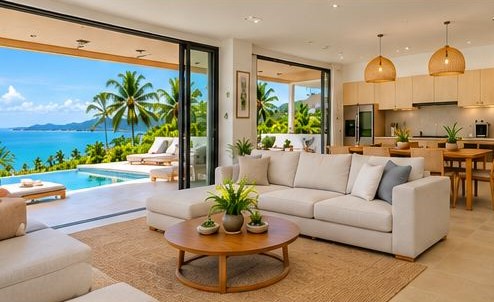
Even when someone plans to keep a villa for many years, I believe it’s worth considering how easy the property might be to sell in the future.
When I assess a villa, I think about what another buyer would find attractive.
Good road access, practical layouts, well-maintained buildings, convenient locations, and clear legal documentation can all influence resale appeal.
For leasehold properties, the remaining lease term may also affect future buyer interest.
A property that is attractive today should ideally remain practical and marketable several years from now.
12. Why I Recommend an Independent Property Lawyer
As a real estate agent, my role is to help buyers find suitable properties, arrange viewings, communicate with sellers and developers, and guide them through the purchasing process.
However, legal due diligence is a separate professional responsibility.
I always encourage buyers to work with an independent Thai property lawyer who can review the documentation and explain the legal implications of the purchase.
The lawyer should verify ownership, contractual rights, land registration, relevant permits, and any restrictions affecting the property.
This is particularly important for international buyers who may not be familiar with Thai property law.
A careful legal review can help buyers understand exactly what they are purchasing before committing their money.
13. My Personal Advice to Anyone Buying a Villa in Koh Samui
After visiting different properties around Koh Samui, one thing I’ve learned is that every villa has its own advantages and disadvantages.
Some properties impress you immediately with beautiful architecture and sea views.
Others might look simpler but offer a better location, easier access, lower maintenance costs, or a more practical layout.
For me, a good property is not simply the one with the most beautiful swimming pool.
It’s a property that suits the buyer’s lifestyle, budget, long-term plans, and legal requirements.
I encourage buyers to take their time, ask questions, compare different options, and understand the property before making an offer.
Buying a villa should be an exciting experience, but it should also be a well-informed decision.
Final Thoughts: Buying a Villa in Koh Samui With Confidence
Koh Samui offers wonderful opportunities for people looking for a tropical home, holiday retreat, or property investment.
However, purchasing real estate in Thailand involves more than choosing a beautiful villa.
Understanding property ownership, legal documentation, building conditions, maintenance costs, and rental regulations can make a significant difference to the buying experience.
My goal is to help buyers look beyond the photographs and understand what really matters when choosing a property.
If you’re considering buying a villa in Koh Samui, I’d be happy to help you explore different locations, compare properties, and arrange viewings that match your requirements.
Explore villas for sale in Koh Samui at MyThai House.
Disclaimer: This article provides general property information and personal observations, not legal or tax advice. Thai laws, administrative requirements, and fees may change. Buyers should seek independent advice from qualified Thai legal, tax, and building professionals before making a purchase.